Medical billing always requires accuracy in each operation. One digit in the wrong box can slow down the overall payments, trigger denials, or even cause compliance headaches. If you’ve ever submitted a claim and wondered why reimbursement wasn’t received, then the Place of Service code (POS) can help you.
POS 11 is one of the most commonly used POS codes in healthcare billing. This small two-digit code can save you from frustrating denials that take hours of rework. That number also tells insurance companies where the service happened, and that single detail directly affects how much you get paid. If your practice provides office-based care, then it is essential to understand how POS 11 works.
So let’s discuss what POS 11 actually means, how it works, when to use it, how to avoid the common billing mistakes, and how it can speed up payments, reduce denials, and protect your revenue.
What is the Place of Service 11 (POS 11)?
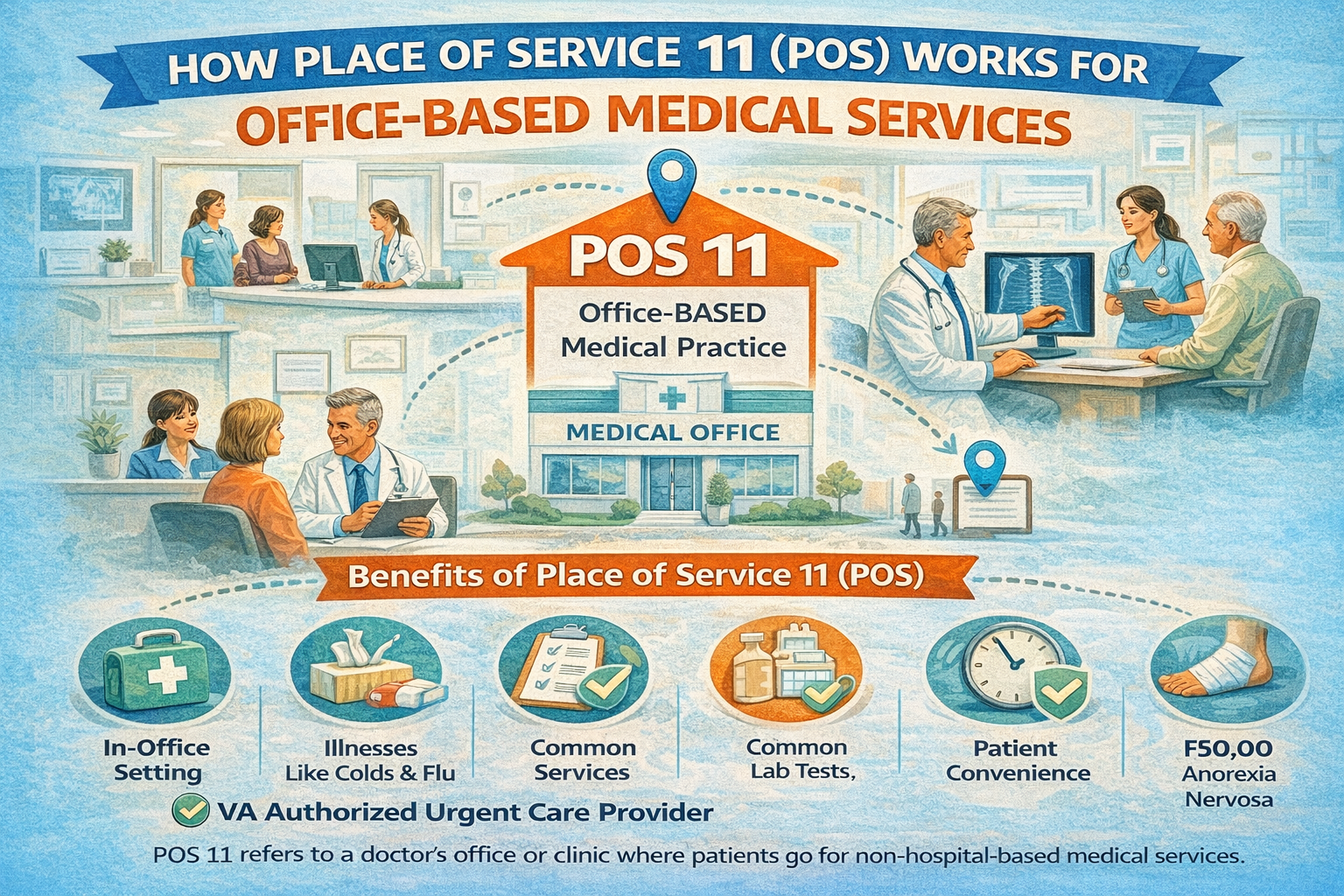
POS 11 stands for Office.
In medical billing terms, POS 11 indicates that the healthcare service was provided in a physician’s office setting, not in a hospital, not in a skilled nursing facility, and not in a patient’s home. Some people consider it very simple but using it is not an easy task.
In billing language, office has a very specific meaning. It refers to a location where the provider routinely delivers healthcare services and maintains medical records. This can include:
- Private physician practices
- Group practices
- Specialty clinics
- Behavioral health offices
- Primary care offices
- Certain urgent care clinics (depending on setup)
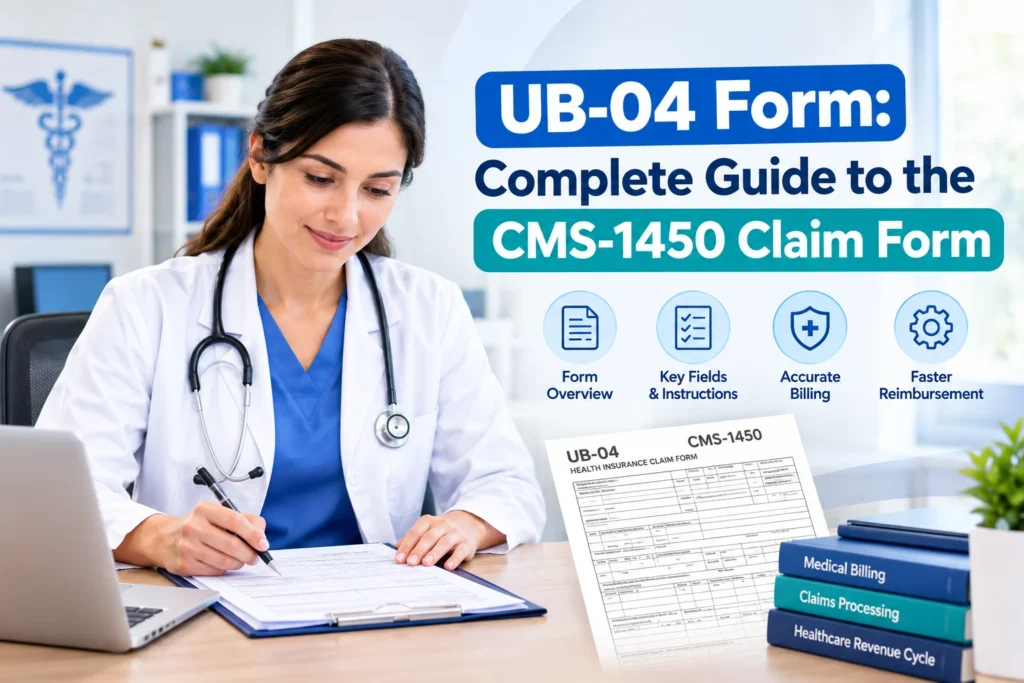
When you submit a CMS-1500 claim form, you enter POS 11 in Box 24B to indicate the location where services were rendered. And payers care a lot about that number.
Why POS 11 Matters So Much in Medical Billing
Most people think that it’s just two digits. But it affects medical billing a lot.
The Place of Service code directly impacts reimbursement rates. Insurance companies calculate payments differently depending on where the service was performed. Office-based services (POS 11) are generally reimbursed at a higher professional rate than hospital outpatient services because the practice bears the overhead costs. Let’s show you a complete scenario.
When a provider performs a service in a hospital outpatient department, the hospital often receives a facility fee, and the provider receives a professional fee. But when services are performed in a physician’s office under POS 11, the provider is responsible for the facility expenses like staffing, equipment, rent, utilities, supplies, and more.
Because of that, Medicare and many commercial payers reimburse differently based on POS.
Using the wrong POS code can mean:
- Underpayments
- Claim denials
- Refund demands
- Compliance audits
- Delayed cash flow
That’s why accurate POS 11 billing is critical for revenue cycle management.
The Official Definition of POS 11
According to CMS guidelines, POS 11 is defined as:
Location, other than a hospital, skilled nursing facility (SNF), military treatment facility, community health center, state or local public health clinic, or intermediate care facility, where the health professional routinely provides health examinations, diagnosis, and treatment of illness or injury on an ambulatory basis.
In simple terms, if it’s your office and a patient walks into your practice location and receives care, then POS 11 applies.
Services Commonly Billed Under POS 11
Most routine outpatient care falls under POS 11. Some common practices include:
Primary Care Services
- Annual physical exams
- Sick visits
- Chronic disease management
- Preventive screenings
Specialty Services
- Cardiology consultations
- Dermatology procedures
- Orthopedic evaluations
- Behavioral health therapy sessions
Office-Based Procedures
- Minor surgical procedures
- Biopsies
- Injections
- Diagnostic testing (if performed in-office)
Mental Health Services
- Psychiatric evaluations
- Counseling sessions
- Medication management
If the service happens inside your practice and you’re not billing under a hospital outpatient arrangement, POS 11 is typically correct.
POS 11 vs. POS 22: What’s the Difference?
People get confused here; that’s why it is important to know the difference.
POS 11 – Office
Used when the service is performed in a physician’s private practice or independent office setting.
POS 22 – Hospital Outpatient Department
Used when services are performed in a hospital outpatient department. Even if the provider is the same person, the location decides the POS code.
For example:
- Dr. Smith sees a patient at her private clinic, then POS 11 applies.
- Dr. Smith sees the same patient at the hospital outpatient department then POS 22 is used.
Same provider. Same service. Different reimbursement.
Billing POS 11 when the service was performed in a hospital outpatient department can trigger audits and recoupments. And payers will easily detect it.
How POS 11 Impacts RVUs
Relative Value Units (RVUs) are used to calculate payment amounts. The three main components are:
- Work RVU
- Practice Expense RVU
- Malpractice RVU
Practice expense RVUs vary depending on whether services are performed in a facility or non-facility setting.
When billed correctly under POS 11 (non-facility), the practice expense component is higher. That directly increases reimbursement. That’s why two digits matter.
Common POS 11 Billing Mistakes
Let’s talk about the mistakes we see all the time.
Using POS 11 for Hospital-Owned Practices
If your office is provider-based and owned by a hospital, you need to use POS 22 even if it feels like a regular office. In this case, ownership and charging structure are also important.
Telehealth Confusion
The POS rules for telehealth are different. Depending on payer guidelines, you need:
- POS 02
- POS 10
- Or POS 11 with modifier 95
Rules vary, so always check payer-specific policies.
Incorrect Credentialing Setup
If a provider has insurance credentialing under a hospital group but bills under a private practice TIN then this mismatched POS codes can cause denials.
Multi-Location Errors
When physicians work at different sites, large practices occasionally neglect to update POS codes. It is POS 11 one day and POS 22 the next. So consistency is important.
POS 11 and Medicare Reimbursement
Medicare uses the Physician Fee Schedule (PFS), and reimbursement rates often differ based on location.
Many CPT codes have:
- A facility rate
- A non-facility rate
When you bill under POS 11, you’re typically paid the non-facility rate, which is higher because it accounts for overhead costs.
If you mistakenly bill POS 22 instead of POS 11, you can receive a lower payment than you should have. That means you miss the revenue here.
Documentation Requirements for POS 11
Payers expect documentation to support:
- Service location
- Rendering provider
- Date of service
- Medical necessity
- CPT and ICD-10 coding
If you bill POS 11 even though your documentation indicates hospital-based care, you are immediately inviting audits. So always state the workplace setting in your notes clearly.
POS 11 and Modifier Usage
POS codes can interact with modifier usage. Some examples include:
- Modifier 25 (important E/M service that can be identified independently)
- Modifier 59 (unique procedural service)
- Modifier 95 (telehealth)
The POS code tells the payer where the service occurred. And the modifier explains how it occurred. Both must align correctly.
POS 11 and Telehealth: The Ongoing Changes
Telehealth is now getting more common day by day and has reshaped billing rules.
During public health emergencies, CMS allowed providers to bill POS 11 with modifier 95 to receive non-facility rates for telehealth services delivered from the office. But remember that policies change frequently so always verify current payer rules. It is also better to confirm before submitting a claim.
How POS 11 Affects Commercial Insurance Claims
Medicare sets the standard but private payers also modify their payments according to POS. Some private insurers:
- Copy the facility and non-facility rates for Medicare.
- Based on the configuration, require prior authorization.
- Implement site-of-service variations
Incorrect POS 11 billing can lead to:
- Downcoding
- Bundling
- Claim rejection
- Contract violations
Revenue Cycle Impact of Incorrect POS 11 Billing
If a high-volume practice misuses POS 11 for procedures that should be billed under POS 22, then overpayments can occur quickly. When discovered, payers request refunds, sometimes going back years.
On the other side, underbilling with the wrong POS means you’re consistently losing revenue. Accurate POS 11 billing directly impacts:
- First-pass claim acceptance rate
- Days in A/R
- Net collection ratio
- Audit risk
- Compliance standing
It’s not just coding. It’s a strategy.
When NOT to Use POS 11
Avoid POS 11 if the service was performed in:
- Hospital outpatient department (POS 22)
- Inpatient hospital (POS 21)
- Skilled nursing facility (POS 31 or 32)
- Patient’s home (POS 12)
- Separate classification for urgent care centers (POS 20 in some cases)
Make sure the POS code and the real service location match.
Best Practices for Accurate POS 11 Billing
With the right use of the POS 11 code, healthcare practices gain a lot of benefits as well. And you’ll see accuracy if you follow these best practices.
Train Front Desk and Scheduling Teams
The front desk often knows the location details first. Clear internal workflows reduce downstream errors.
Verify Ownership Structure
Know whether your location is independent or hospital-owned. This will help you to decide and use the right POS code.
Audit Claims Regularly
Run monthly reports filtering by POS to identify inconsistencies. This will save you from denials.
Align Documentation with Billing
Your clinical notes should clearly show office-based care. The clearer your documentation is, the more quickly your claim gets passed.
Stay Updated on CMS Changes
Telehealth and site-of-service rules update frequently so check before submission of claims.
How Revantage Billing Helps Practices Get POS 11 Right
Revantage Billing provides professional medical billing services. Our experienced team of experts knows the medical coding rules. We not only submit claims but also review all the providers’ enrollment details and confirm correct POS coding across locations. We perform complete internal compliance audits and monitor reimbursement variances. We try to ensure accuracy in every process. We understand that errors can occur but POS errors are preventable if someone’s paying attention. So if you want a complete medical billing solution and want your practice to grow, then choose Revantage Billing as your billing partner.