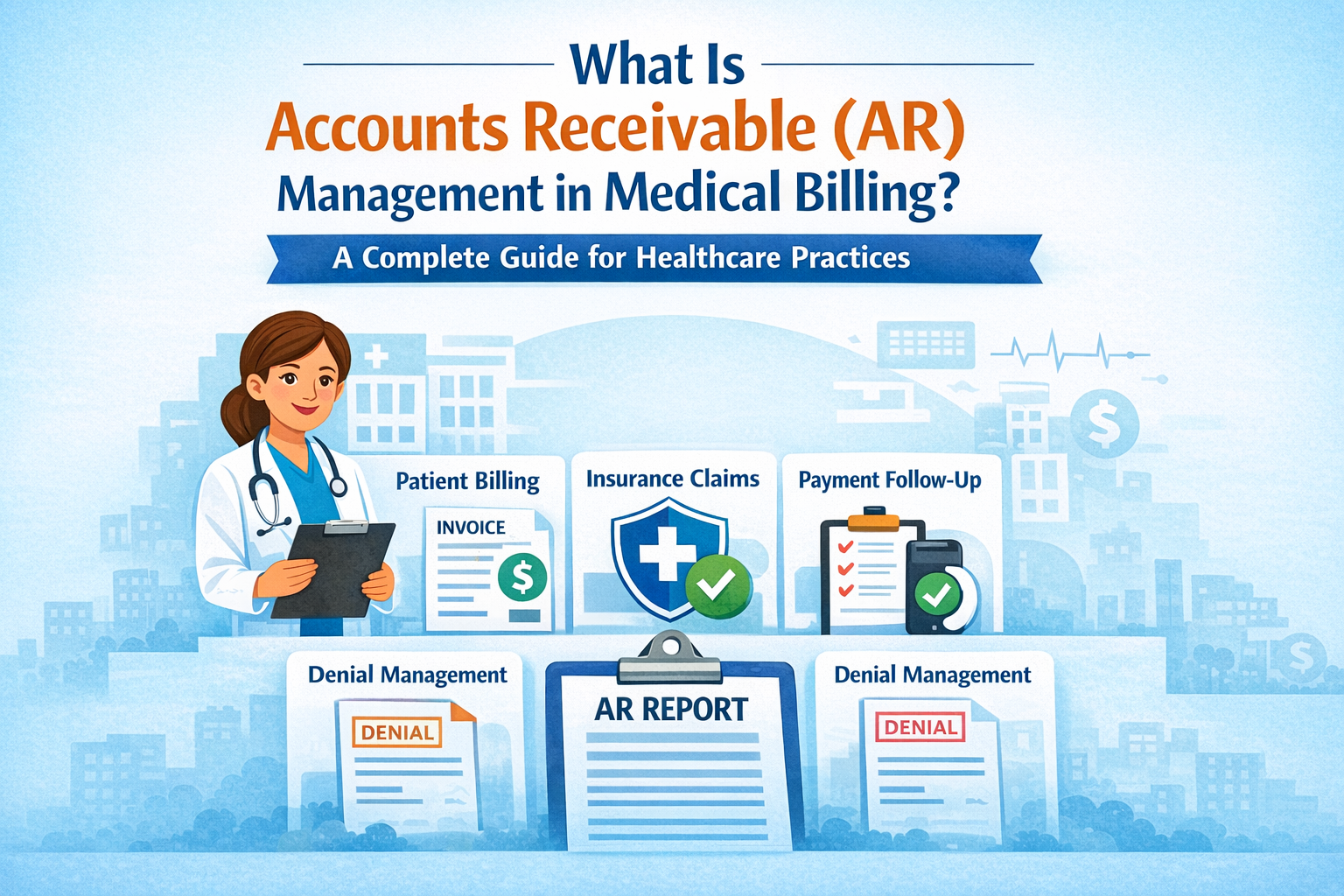
Accounts receivable or AR management is the difference between consistent cash flow and financial stress. Running a practice does not mean to treat patients only, but it’s more about making sure your services actually turn into revenue. Most of the practices claim that patients are coming in, services are being delivered but the money doesn’t always show up on time. You deliver quality care, submit claims, and then wait. Sometimes for weeks. Sometimes for months. And sometimes, payments never arrive at all.
Here, Accounts Receivable (AR) management in medical billing plays a critical role in filling the gap between care delivered and money collected. When it’s working properly, payments come in quickly, and when it’s not, revenue slows down, stress piles up, and growth stalls.
AR is also considered one of the most misunderstood parts of medical billing.
So let’s clear up all the confusion and discuss what AR management in medical billing is, how it works, why it matters so much, and how healthcare practices can improve it with the right billing partner.
What Is Account Receivable (AR) Management in Medical Billing?
What Is Account Receivable (AR) Management in Medical Billing?
Accounts receivable (AR) management is the process of tracking, managing, and collecting payments owed to a healthcare provider for services already rendered. In medical billing terms, AR includes:
- Unpaid insurance claims
- Pending patient balances
- Underpaid or denied claims
- Claims stuck in processing
Basically, if money is owed to your practice and hasn’t been collected yet, it’s part of your AR.
AR management in medical billing ensures that:
- Claims are followed up promptly
- Denials are corrected and resubmitted
- Payments are posted accurately
- Patient balances are collected efficiently
AR management always requires ongoing monitoring, follow-ups with insurance companies, correction of claim errors, denial appeals, and patient communication. Without a structured AR strategy, even a high-volume practice can struggle to stay financially stable.
Why AR Management Is So Critical for Healthcare Practices
Why AR Management Is So Critical for Healthcare Practices
Medical billing is always complicated because insurance rules change, payers delay payments, and claims get denied for tiny mistakes. And before you know it, revenue starts losing. It affects the entire operation of your practice; that’s why effective AR management is important for healthcare practices.
It Keeps Cash Flow Predictable
Healthcare expenses don’t wait. Each month, payroll, rent, supplies, and equipment costs come whether payments are made or not. AR management ensures your revenue arrives when it should.
It Reduces Revenue Leakage
Unworked denials, missed follow-ups, and aging claims quietly drain your income. Proper AR management helps recover money that would otherwise be written off.
It Improves Financial Visibility
Knowing exactly how much money is outstanding helps you make smarter business decisions.
It Strengthens Practice Growth
Consistent collections mean more assets to invest in staff, technology, and patient care.
Understanding AR Aging in Medical Billing
Understanding AR Aging in Medical Billing
One of the most important concepts in AR management for medical billing is AR aging. AR aging organizes unpaid claims based on how long they’ve been outstanding. This helps billing teams to prioritize follow-ups and prevent claims from going cold.
AR is grouped into different categories:
- 0–30 days: Recently submitted claims
- 31–60 days: Claims that need follow-up
- 61–90 days: High-risk claims
- 90+ days: Claims at serious risk of non-payment
The longer a claim remains unpaid, the harder it becomes to collect.
Most healthy practices aim to:
- Keep AR days under 30–40
- Minimize claims over 90 days
- Aggressively work on aging balances
The Complete AR Management Process in Medical Billing
The Complete AR Management Process in Medical Billing
We can’t say that AR management is the name of just one task. It’s a series of steps working together to make your revenue smooth at the end.
Clean Claim Submission
Good AR starts before a claim is even sent. Accurate patient information, insurance verification, and proper coding reduce the chances of denial later. Clean claims mean fewer delays and faster reimbursements.
Payment Posting
When payments arrive, they must be posted correctly. This includes:
- Insurance payments
- Patient payments
- Adjustments and write-offs
Incorrect posting creates confusion and false balances.
Insurance Follow-Ups
Not all claims are processed on time. Insurance companies often delay or overlook claims unless follow-up occurs. AR teams track unpaid claims daily and follow up with payers before deadlines are missed.
Denial Management
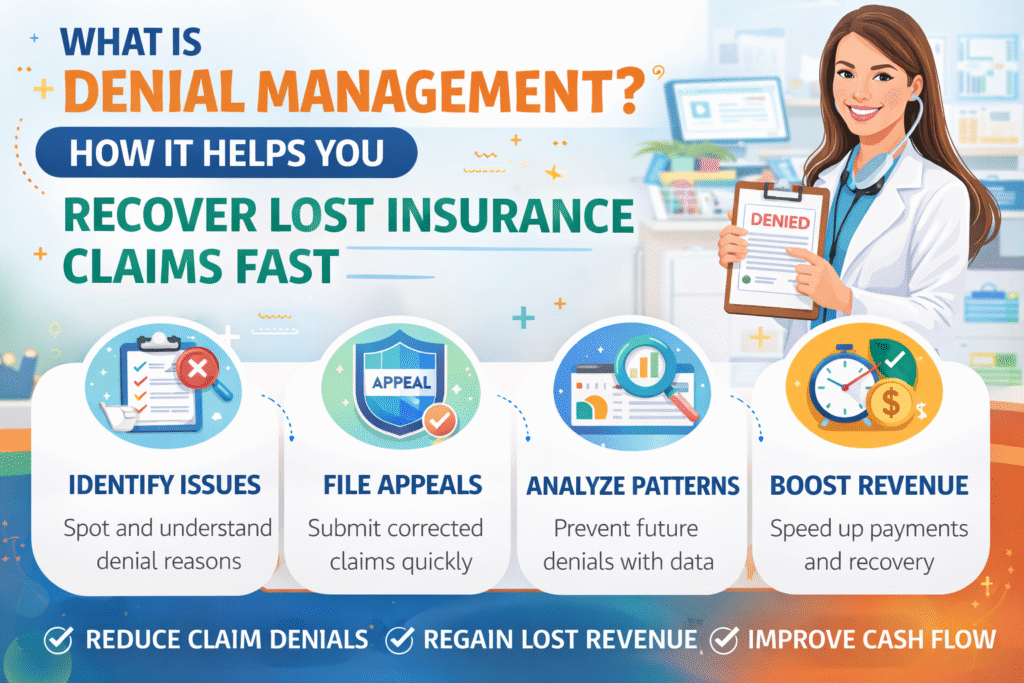
Denials are common but they don’t have to mean lost revenue. Strong AR management identifies why claims were denied, fixes the issue, and resubmits them quickly. Over time, denial trends are analyzed to prevent repeat errors.
Patient Balance Collections
Once insurance pays, the remaining balances must be moved to the patients clearly. Clear communication, accurate statements, and respectful follow-up improve collection rates without damaging patient relationships.
Reporting & Analysis
Regular AR reports provide insight into what’s working and what isn’t. They also show payer delays, denial trends, and opportunities for improvement.
Common AR Management Challenges in Medical Billing
Common AR Management Challenges in Medical Billing
Businesses can’t run without challenges, and healthcare practices also face challenges when talking about accounts receivable management. Here are some of the most common AR problems that practices encounter and why they’re so difficult to manage in-house.
High Denial Rates
Claim denials are one of the biggest contributors to AR backlogs. These denials are often caused by coding errors, incomplete documentation, missing modifiers, or authorization issues. Sometimes the mistake is minor, but it’s enough for an insurance company to reject the claim. When these denials are not addressed quickly, then collectible revenue turns into write-offs. So, without a structured denial management process, practices face the same errors repeated over and over.
Slow Insurance Payments
Insurance companies don’t all operate on the same timeline. Some pay quickly, while others take weeks or even months to process claims. Without consistent follow-up, claims remain in “pending” status far longer than they should. Over time, these delays disturb the whole cash flow and make it harder for practices to cover day-to-day expenses. That’s why regular payer follow-ups are essential, but also require time, persistence, and payer-specific knowledge.
Underpayments That Go Unnoticed
Underpayments are easy to miss, especially in high-volume practices. Insurance companies can reimburse less than the contracted amount, and without careful review, those shortfalls are often accepted as final payment. Over time, these small underpayments add up to great revenue loss. Effective AR management includes comparing payments against payer contracts and following up on any discrepancies but many in-house teams simply don’t have time to do so.
Staff Overload and Limited Resources
Many practices rely on small in-house billing teams that are already overworked. Staff members are often involved in patient check-ins, insurance verification, phone calls, payment posting, and claim submissions—all at once, which is not an easy task. With so many responsibilities, AR follow-ups can easily fall to the bottom of the priority list. When that happens, claims age, denials go unworked, and revenue slows down.
Poor AR Visibility and Reporting
Without detailed and accurate AR reports, it’s difficult to know where problems exist. Some practices aren’t fully aware of how much money is outstanding, how old their AR really is, or which payers are causing the most delays. This lack of visibility makes it nearly impossible to fix issues proactively. Strong AR reporting provides clarity, accountability, and direction but many practices simply don’t have access to that level of insight internally.
Key Metrics That Define Strong AR Performance
Key Metrics That Define Strong AR Performance
If you want to know whether your AR management is working, these metrics matter:
- Days in AR: Measures how long it takes to collect payments
- First-Pass Claim Acceptance Rate: Indicates clean claim submission
- Denial Rate: Shows how often claims are rejected
- Collection Ratio: Percentage of collectible revenue actually collected
- AR Over 90 Days: Highlights at-risk revenue
In-House vs. Outsourced AR Management: Which Is Better?
In-House vs. Outsourced AR Management: Which Is Better?
Many healthcare practices start with in-house AR management. And while that works for some time, it often becomes unsustainable as volume grows.
In-House AR Management
Pros:
- Direct control
- Familiarity with practice operations
Cons:
- Limited expertise across multiple payers
- Staffing challenges
- Higher overhead
- Slower follow-ups
Outsourced AR Management
Pros:
- Dedicated AR specialists
- Faster collections
- Reduced denials
- Lower operational costs
- Advanced reporting
Cons:
- Requires trust in a billing partner
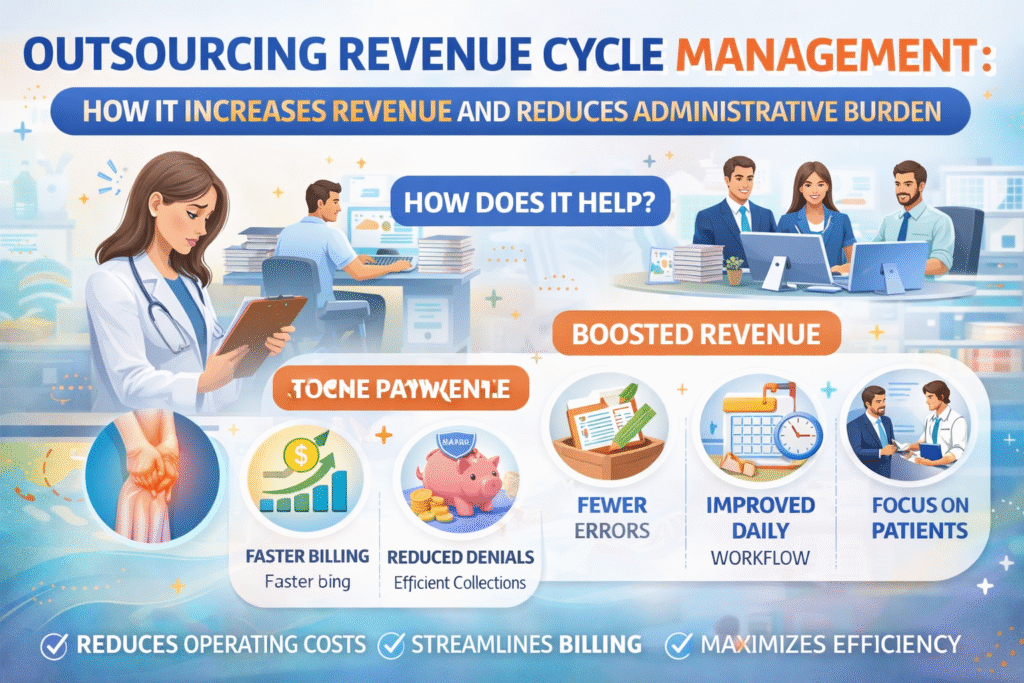
For many practices, outsourcing AR to a specialized and trusted medical billing company like Revantage Billing leads to faster payments and fewer headaches.
How Revantage Billing Handles AR Management Differently
How Revantage Billing Handles AR Management Differently
AR services are not always equal. Revantage Billing, which is a specialized medical billing company, takes a proactive approach to AR management. Our years of experience to handle medical billing tasks and deliver innovative Revenue Cycle Management solutions making us a preferable choice. Instead of waiting for problems to grow, we address issues early and aggressively without sacrificing compliance or transparency.
Revantage Billing provides:
- Dedicated AR specialists focused only on collections and track each claim closely
- Timely insurance follow-ups and payer communication without crossing compliance lines
- Thorough denial analysis to identify patterns and appeal management
- Detailed AR reporting with clear insights so you always know what’s outstanding, what’s been collected, what’s pending, and what needs action.
- Our AR strategy is customized based on the practice’s specialty, payer mix, and claim volume.
How Strong AR Management Improves Patient Experience
How Strong AR Management Improves Patient Experience
AR management isn’t just about money—it impacts patients too.
AR management doesn’t just affect your revenue; it also affects your patients. Confusing bills, incorrect balances, and delayed statements can frustrate patients and damage trust.
When AR processes are smooth:
- Patients trust your billing
- Fewer disputes occur
- Collections feel respectful, not aggressive
A well-managed AR system supports both financial health and patient satisfaction.
Final Thoughts
Final Thoughts
Accounts receivable management isn’t just a backend task; it’s necessary for your practice’s financial health. With efficient AR management, your revenue flows consistently, stress levels drop, and your practice can focus on patient care.
Whether you’re a small clinic or a growing healthcare organization, investing in strong AR management in medical billing pays off.
At Revantage Billing, we ensure healthcare providers get paid fully, fairly, and on time, without the constant follow-up chaos. Outsourcing your medical billing needs is the smartest next step to reduce denials and improve the financial health of your practice.