When walking into any medical practice like urgent care, family medicine, specialty clinic, or multi-provider group, the first impression doesn’t come from the physician. It comes from the front desk.
Patients first interact with the front desk team even before meeting a provider, getting examined, or receiving treatment. That’s why this first impression sets the way for everything that follows. A smooth, friendly, and well-organized front desk can make patients feel confident and cared for. And a disorganized staff always creates frustration before the visit even begins.
Front desk management does not mean having a smiling face and answering the calls. It’s a block that keeps the entire medical practice running financially, operationally, and emotionally.
Why is front desk management truly the backbone of a successful medical practice? Let’s discuss what happens when it’s done right and how practices can strengthen this critical function without burning out their staff.
What does the front desk staff do?
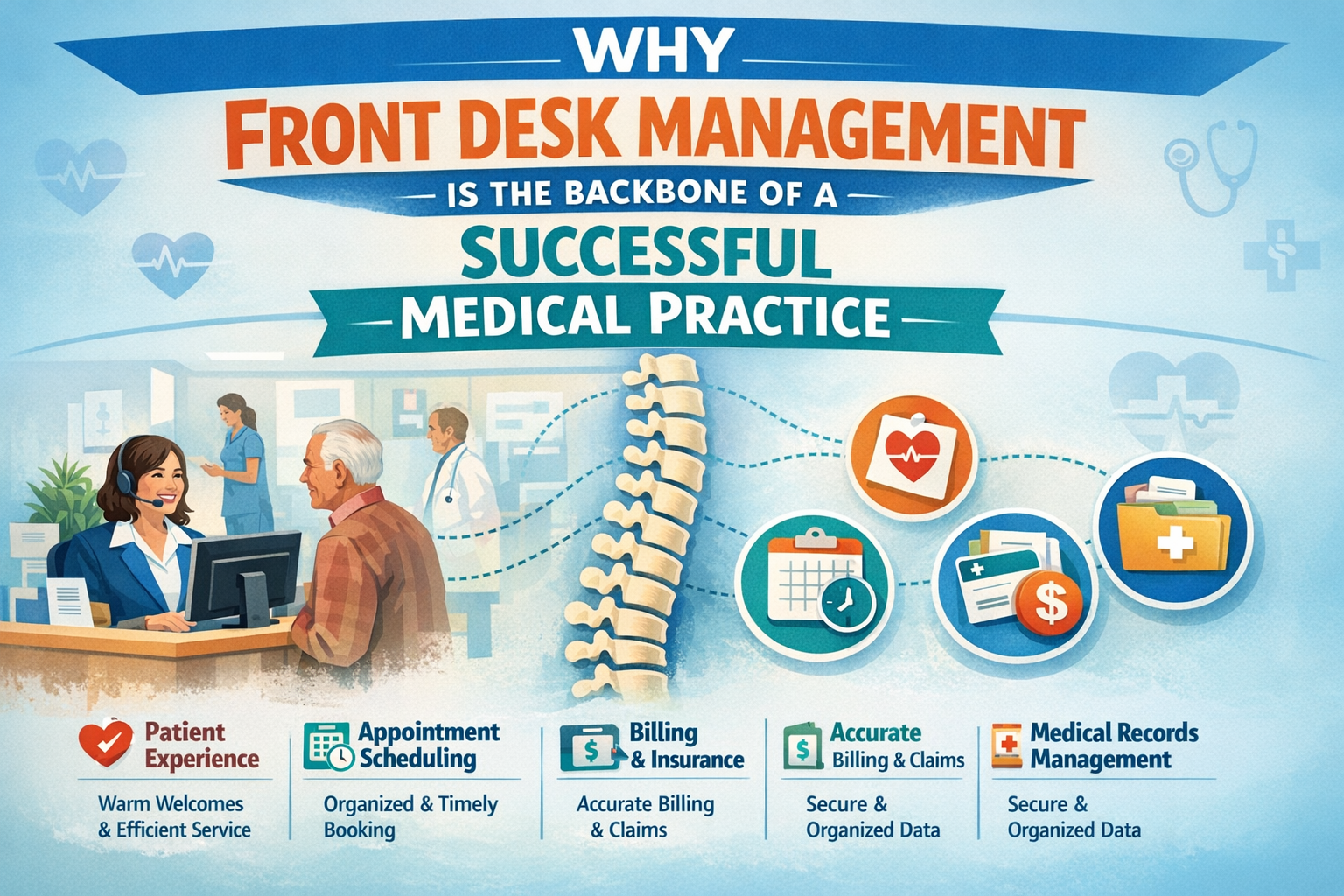
The front desk not only handles the incoming patients, but also greets them or manages their clipboards. Having these duties in mind is a totally wrong conception, as the front desk is all about patient experience, billing accuracy, and revenue cycle success. They handle those tasks that directly decide whether a practice gets paid or not. Front desk teams are responsible for:
- Patient scheduling and appointment confirmations
- Verifying insurance eligibility and benefits
- Collecting copays, deductibles, and self-pay fees
- Capturing accurate patient demographics
- Managing referrals and prior authorizations
- Communicating delays or policy changes
- Coordinating with clinical and billing teams
All of these tasks, on which your practice revenue depends, are handled by front desk staff. Here, a small error at the front desk like a typo in an insurance ID or a missed eligibility check, can disturb the entire revenue cycle and result in claim denials, delayed payments, or lost revenue. That’s why front desk management isn’t about administrative work. It’s strategic work.
First Impressions Matter More Than You Think
Healthcare is personal. Patients often walk into a medical office feeling anxious, sick, or stressed. In this situation, they want a cooperative staff who understands their needs and removes all their confusion. The front desk is their first human interaction, and they always remember how they’re treated. A well-managed front desk can:
- Instantly make patients feel welcome
- Reduce anxiety and confusion
- Build trust in the practice
- Encourage long-term patient loyalty
On the other side, a poorly managed front desk can:
- Create long wait times
- Causes miscommunication and frustration
- Led to negative reviews and lost patients
- Damage the practice’s reputation
Now in this digital world, people first check online reviews and social media to choose any practice, so one bad experience can quickly turn into a one-star rating that lives forever on Google. Strong front desk management is also necessary for reputation management.
Front Desk Accuracy means Clean Claims and Faster Payments
Each practice wants a higher revenue cycle, which is connected to medical billing. And front desk operations directly connect to medical billing.
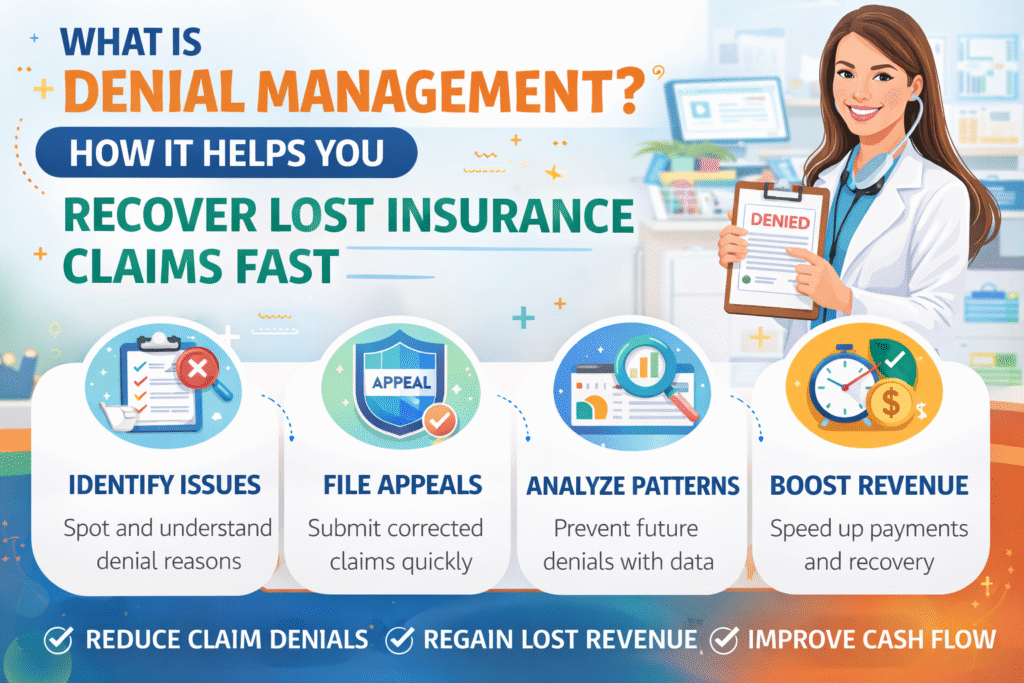
Most claim denials don’t happen because the provider delivered poor care. They happen because of front-end errors, such as:
- Incorrect patient demographics
- Invalid or inactive insurance coverage
- Missing referrals or authorizations
- Failure to collect copays at the time of service
- Mismatched policyholder information
All of these issues originate at the front desk.
When front desk staff are properly trained, supported, and managed, practices see:
- Fewer claim rejections
- Faster reimbursement timelines
- Lower accounts receivable (A/R)
- Reduced billing rework and follow-ups
Keep in mind: the cleaner the front end, the smoother the back end.
Billing teams can only work with the data they’re given. So if the front desk gets it right the first time, then everything becomes simpler and easier.
The Role of Front Desk Management in Revenue Cycle Management (RCM)
Revenue cycle management doesn’t start with coding. It starts the moment a patient calls to schedule an appointment. That’s why front desk management plays a critical role in nearly every stage of RCM:
Appointment Scheduling and Pre-Visit Prep
Accurate scheduling means the right visit type, correct provider, and appropriate billing codes later on. Pre-visit insurance verification prevents surprises for both the patient and the practice and makes the healthcare process clearer.
Insurance Verification and Eligibility Checks
Confirming coverage before the visit reduces denials and allows staff to inform patients upfront about financial responsibility.
Point-of-Service Collections
Collecting copays and deductibles at check-in significantly improves cash flow and reduces patient balances that are harder to collect later.
Accurate Data Entry
Clean patient demographics and insurance details reduce billing errors and speed up claims processing.
Communication With Billing Teams
When front desk staff communicate changes, issues, or patient updates clearly, billing teams can act on it quickly and effectively. So all the front desk management is actually revenue cycle management.
Front Desk Burnout Is a Real and Growing Challenge
There’s no doubt the front desk roles are tough.
Staff members manage phones ringing nonstop, patients waiting in line, insurance questions, provider requests, and upset patients. All these tasks at the same time. Without proper management, systems, and support, burnout is increasing. The major reasons for this burnout are:
- High staff turnover
- Increased data entry errors
- Short tempers or poor patient interactions
- Missed insurance verifications
- Declining morale
When burnout happens, the performance ultimately drops and it hits the entire practice. An effective front desk management focuses not just on productivity but also on workflows, staffing levels, training, and realistic expectations. Practices that invest in their front desk teams see better outcomes.
Technology Helps but Management Still Matters
Modern practices rely heavily on EHRs, scheduling software, and automated reminders. All these tools absolutely help simplify front desk operations, but they can’t replace strong management. Without proper oversight:
- You can’t use the systems correctly
- Data is entered inconsistently
- Sometimes automation creates confusion instead of efficiency
Great front desk management ensures that technology is not just available but it is used the right way. When technology mixes with the right front desk management, it boosts the overall performance of a practice, including:
- Standardized workflows
- Clear documentation processes
- Ongoing staff training
- Accountability and quality checks
Technology is a tool but management is what makes it effective.
Strong Communication Holds the Entire Practice Together
All the communication is handled by a front desk team. They ensure the communication between:
- Patients
- Providers
- Nurses and clinical staff
- Billing and coding teams
- Practice administrators
When communication gaps occur, mistakes multiply.
Strong front desk management emphasizes:
- Clear internal communication protocols
- Consistent patient messaging
- Proper documentation of conversations and requests
- Smooth handoffs between departments
This level of coordination reduces misunderstandings, improves patient flow, and prevents costly billing errors.
Common Front Desk Mistakes That Hurt Medical Practices
Even well-intentioned teams can make mistakes if management is lacking. Some of the most common issues we see include:
- Skipping insurance verification due to time pressure
- Not collecting copays consistently
- Entering incomplete patient information
- Poor documentation of patient conversations
- Lack of standardized procedures
Over time, these small issues turn into lost revenue, frustrated staff, and unhappy patients. But the good thing is that these problems are completely fixable with the right systems and support.
Why Many Practices Choose to Outsource Front Desk Support
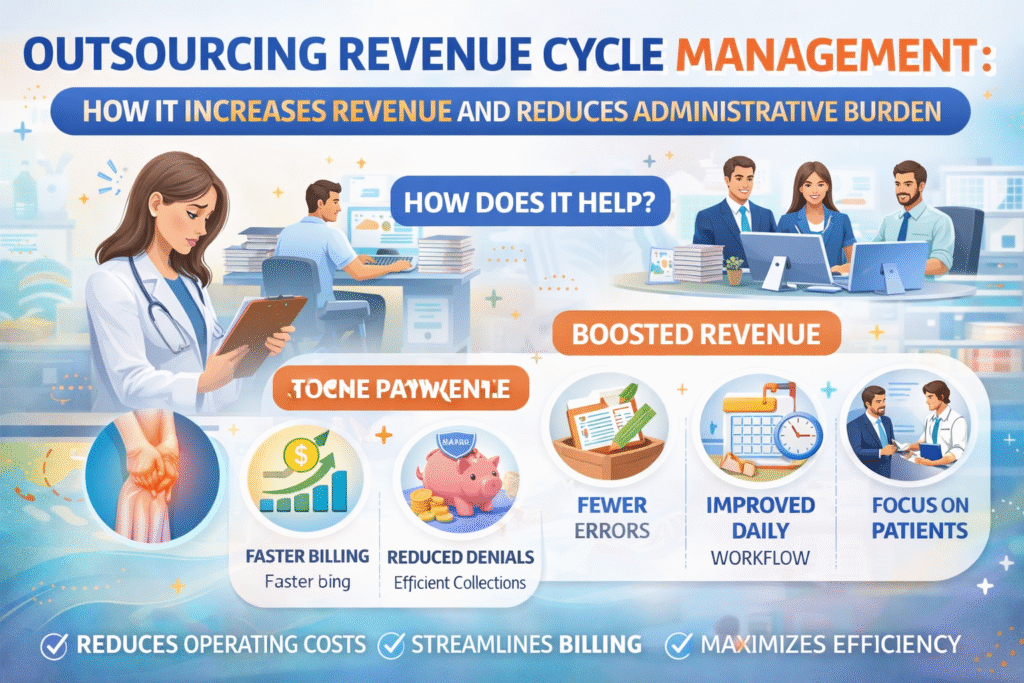
Managing an in-house front desk team isn’t easy, especially for growing practices. That’s why more providers who want to grow their practices are turning to outsourced front desk management and billing support. Outsourcing can help with:
- Insurance verification
- Appointment scheduling
- Eligibility checks
- Prior authorizations
- Revenue cycle coordination
At Revantage Billing, which is an experienced medical billing company, we understand how closely front desk operations and billing outcomes are connected. Our approach focuses on front-end accuracy, clear communication, and revenue protection, so practices can focus on patient care, not administrative chaos.
The Revantage Billing Perspective: Front Desk as a Revenue Partner
At Revantage Billing, we have an experienced front desk team who know how to handle the billing complexity to generate more revenue. We understand that the front desk is not a cost center; it works as a revenue partner. So we align the front desk workflows with the billing best practices. So the healthcare practices experience:
- Fewer claim denials
- Faster reimbursements
- Improved patient satisfaction
- Lower administrative stress
- More predictable cash flow
At Revantage Billing, our focus on front desk management and billing operations helps you make your practice strong in the healthcare field.
Building a Strong Front Desk Starts With the Right Strategy
If you want your medical practice to grow and remain financially healthy, then effective front desk management is essential. It requires:
- Clear leadership
- Ongoing training
- Smart workflows
- Supportive technology
- Strong billing alignment
The front desk is where patient experience begins, revenue cycle success starts, and trust is built.