Diarrhea is a common gastrointestinal condition that affects individuals of all ages and often requires medical attention. It seems like a very simple diagnosis but in reality, choosing the right ICD-10 code for diarrhea requires attention to detail, clinical understanding, and proper documentation. Accuracy in the ICD-10 code is not just important for compliance but also helps to prevent claim denial and delays in reimbursement. And any error in coding can result in delays, underpayment problems, and denied claims.
That’s why it is essential to have a complete knowledge of ICD-10 codes for diarrhea. So let’s discuss everything you need to know about ICD-10 codes for diarrhea.
What Is Diarrhea?
Diarrhea is generally defined as the passage of loose or watery stools at least three times a day. It can be acute and can last for a few days or chronic, which takes more than four weeks to recover. But mostly diarrhea is considered mild and self-limiting; it can also turn into infections, gastrointestinal disorders, or systemic diseases. And from the coding perspective, it is important to know the cause, duration (acute vs chronic), and any associated symptoms or complications. The more specific your documentation is, the more accurate the ICD-10 code you can use.
Why Accurate ICD-10 Coding for Diarrhea Matters
There’s no doubt that coding errors are not just expensive but also take too much time to resubmit the claims. Incorrect or vague coding can lead to:
- Claim denials
- Reduced reimbursements
- Compliance risks
- Audit issues
On the other side, accurate medical coding helps to:
- Maximize revenue
- Support medical necessity
- Improve patient documentation
- Reduce billing delays
For practices handling high patient volumes like urgent care centers, it is more essential to have the right diarrhea ICD-10 codes.
Primary ICD-10 Code for Diarrhea
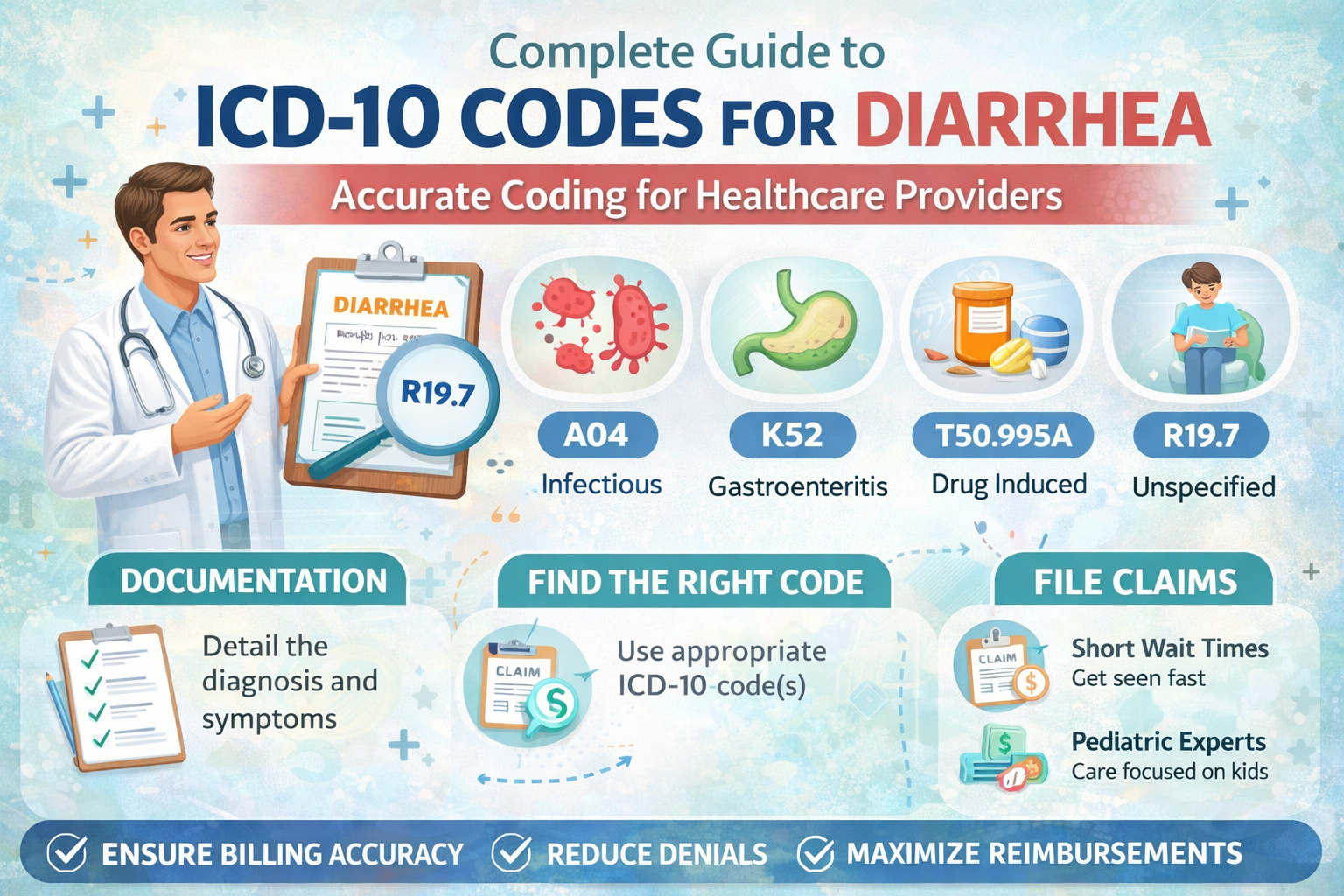
R19.7 ICD-10 Code: Diarrhea, Unspecified Explained
This is the most commonly used ICD-10 diarrhea unspecified code.
Use R19.7 when:
- The cause of diarrhea is unknown
- The provider documents symptoms without a confirmed diagnosis
- It’s an initial visit and testing is still pending
For example:
A patient presents with loose stools for two days and there are no lab results yet, so the R19.7 code will be used.
This code is convenient but overusing it can cause lower reimbursement or claim scrutiny. So always try to use more specific code.
ICD-10 Codes for Infectious Diarrhea
When diarrhea is caused by an infection, you should code the underlying condition instead of using R19.7.
Some common categories of infectious diarrhea ICD-10 include:
A00–A09: Intestinal Infectious Diseases
These codes are used when diarrhea is linked to bacterial, viral, or parasitic infections.
Common Codes:
- A04.7 – Enterocolitis due to Clostridium difficile
- A09 – Infectious gastroenteritis and colitis, unspecified
- A02.0 – Salmonella enteritis
- A03.9 – Shigellosis, unspecified
- A08.4 – Viral intestinal infection, unspecified
When to Use These Codes:
Prefer these codes if your:
- Lab results confirm infection
- Physician documents specific pathogen
- Symptoms clearly indicate an infectious cause
For example:
If a patient is diagnosed with C. diff infection, then the code A04.7 will be used.
ICD-10 Codes for Chronic Diarrhea
Chronic diarrhea is usually a symptom of an underlying condition. In these cases, you should code for the primary disease.
Common Conditions and Codes:
- K58.0 – Irritable bowel syndrome with diarrhea (IBS-D)
- K52.9 – Noninfective gastroenteritis and colitis, unspecified
- K50.90 – Crohn’s disease, unspecified
- K51.90 – Ulcerative colitis, unspecified
For example:
A patient with IBS or frequent diarrhea used the chronic diarrhea ICD-10 code K58.0. But remember that using R19.7 for each condition is not right. Avoid it if a chronic condition is already diagnosed.
ICD-10 Codes for Medication-Induced Diarrhea
Sometimes diarrhea is caused by medications, especially antibiotics, chemotherapy, or laxatives. In these cases, different coding should include:
- The adverse effect code
- The specific condition, if applicable
For example, the K52.1 code is used for Toxic gastroenteritis and colitis. Plus an external cause code for the drug. If a patient develops diarrhea after antibiotic use, then K52.1 + drug-related code is used.
ICD-10 Codes for Traveler’s Diarrhea
Traveler’s diarrhea is a specific type of infectious diarrhea often caused by contaminated food or water.
Common Codes:
- A09 is used for infectious gastroenteritis
- More specific pathogen codes if identified
Documentation Tip:
Make sure the provider notes:
- Travel history
- Suspected exposure
- Symptoms duration
Pediatric Diarrhea Coding Considerations
Coding diarrhea in children is a little bit different and requires extra attention. Because dehydration is a common complication. Some additional codes you should consider here include
- E86.0 – Dehydration
- P78.3 – Neonatal diarrhea (for newborns)
For example, if a child has diarrhea and dehydration, then the R19.7 + E86.0 code will be used.
Coding Diarrhea with Associated Symptoms
Diarrhea is a major part of a disease but there are some diseases associated with diarrhea. For these diseases, some common associated codes include:
- R11.2 – Nausea with vomiting
- R10.9 – Abdominal pain, unspecified
- R50.9 – Fever, unspecified
But remember that you should only code additional symptoms if they are:
- Documented
- Clinically relevant
- Not inherent to the primary diagnosis
Documentation Tips for Accurate Coding
Let’s talk about something that often gets overlooked: documentation.
Even the best coder can’t assign accurate codes without clear provider notes. That’s why documentation is as important as coding in medical billing.
What Providers Should Document:
- Duration (acute vs chronic)
- Severity (mild, moderate, severe)
- Frequency of stools
- Presence of blood or mucus
- Associated symptoms (fever, pain, vomiting)
- Suspected or confirmed cause
- Travel or dietary history
- Medication use
Better documentation means better coding and better reimbursement.
Best Practices for Diarrhea Coding
If you want to ensure coding accuracy, you need a unique strategy.
- Always code to the highest level of specificity
- Review lab results before finalizing codes
- Query providers when documentation is unclear
- Stay updated with ICD-10 coding guidelines diarrhea
- Use coding software or audits for quality checks
How Accurate Coding Impacts Revenue
Coding is an important element of medical billing as it directly affects your revenue cycle.
Accurate ICD-10 coding for diarrhea helps:
- Reduce claim denials
- Speed up reimbursements
- Improve payer relationships
- Enhance compliance
On the other hand, errors can cost your practice thousands in lost revenue each year.
How Revantage Billing Can Help
Revantage Billing is a well-known, experienced medical billing company that always keeps up with coding guidelines, payer rules, and documentation requirements. We take complete responsibility for your revenue cycle management and specialize in helping healthcare providers:
- Improve coding accuracy
- Reduce claim denials
- Maximize reimbursements
- Stay compliant with ICD-10 updates
Our team knows ICD-10 inside and out, including complex cases like chronic and infectious diarrhea. We catch errors before claims are submitted and provide customized billing solutions according to your practice needs. So never leave your coding complexities in inexperienced hands.
Get a free coding audit today and discover hidden revenue opportunities. Contact us today at billing@revantagebilling.com.
FAQs
What is the most common ICD-10 code for diarrhea?
The most commonly used code is R19.7 (Diarrhea, unspecified) which is typically used when the cause isn’t identified.
When should I avoid using R19.7?
Avoid it when a specific cause is known, such as infection, IBS, or inflammatory bowel disease.
Can I code diarrhea with dehydration together?
Yes, if both are documented. For example: R19.7 + E86.0.
How do I code infectious diarrhea?
Use codes from the A00–A09 range, depending on the specific pathogen