With the passage of time, mental health is becoming a more important part of healthcare. In the United States, more people are seeking help for anxiety, depression, trauma, addiction, and other behavioral health conditions than ever before. Therapists, psychiatrists, psychologists, and mental health clinics are working tirelessly to meet that growing demand.
But with this growing number of patients, their main focus is just on their patients and as a result, they ignore one of the most important sides of the practice, which is called medical coding and billing.
Providers need a significant revenue to run their practice but if mental health services aren’t coded correctly, claims can be denied, reimbursements delayed, and revenue lost. Even a small coding mistake can turn into a big financial headache for a practice.
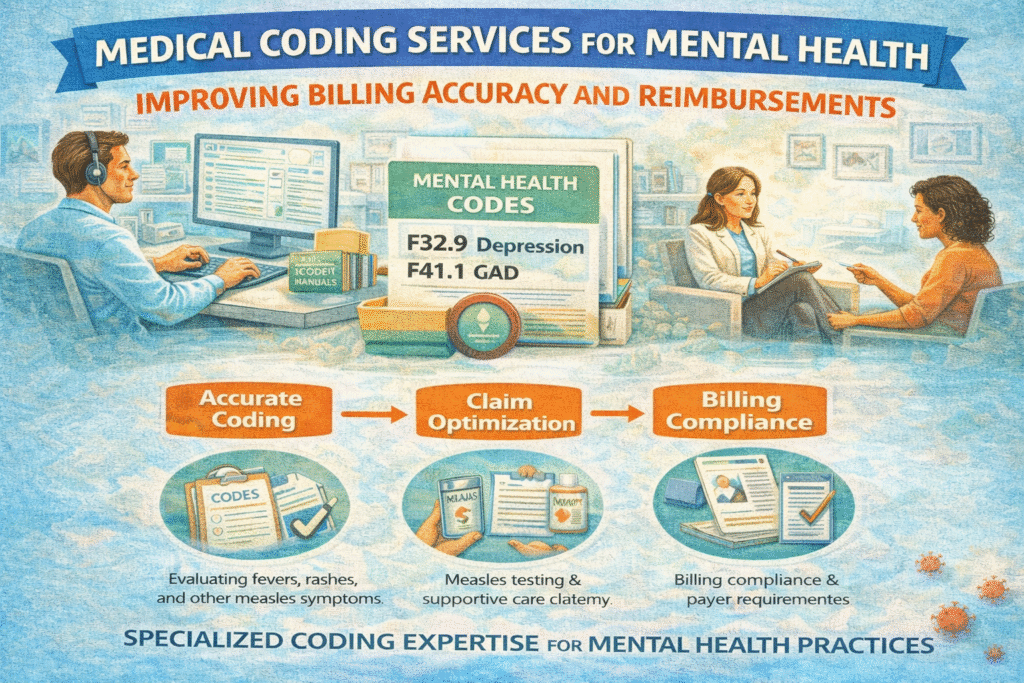
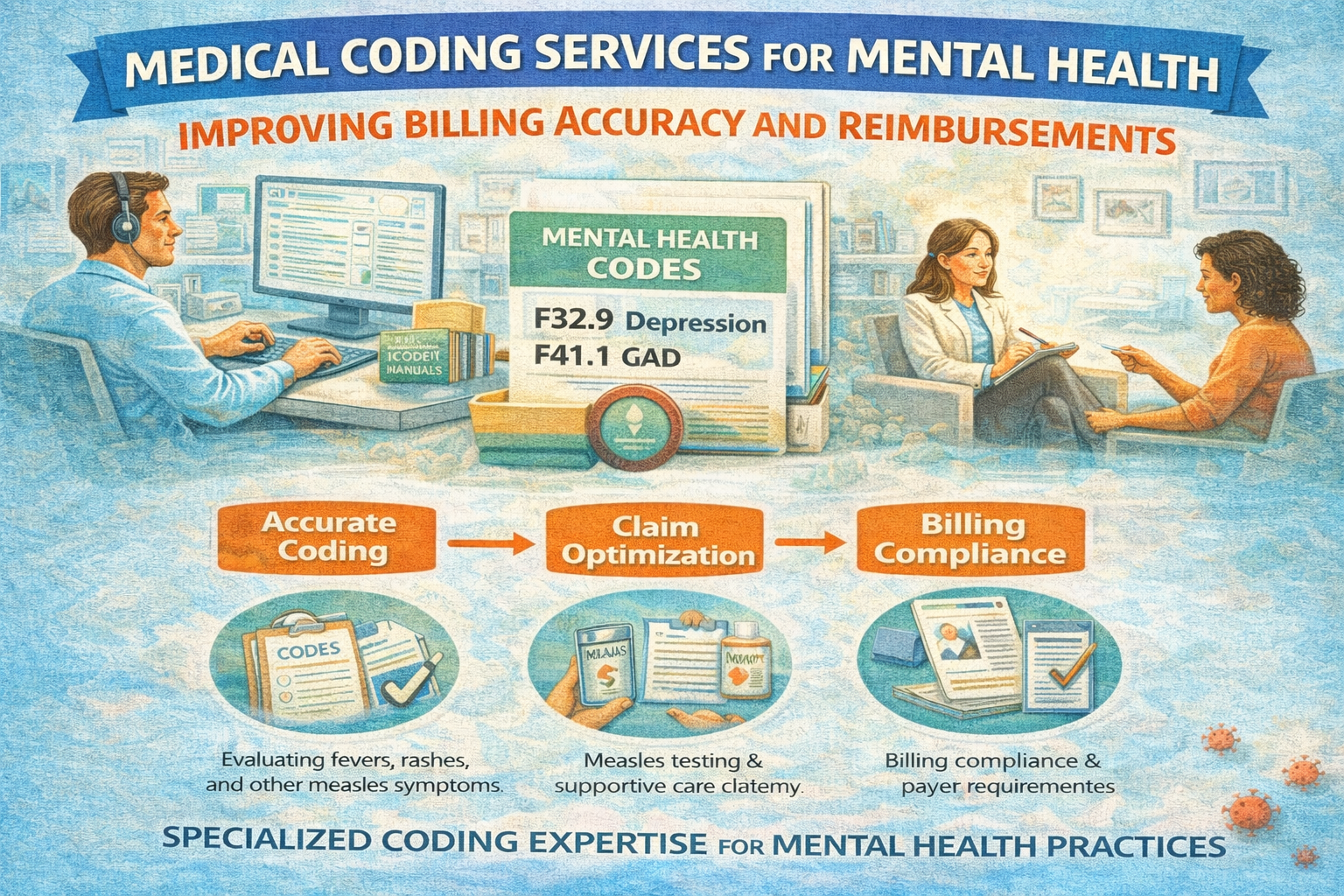
That’s why many behavioral health providers are turning to professional medical coding services for mental health. These services help ensure that every therapy session, psychiatric evaluation, and treatment plan is coded accurately and submitted properly to insurance companies.
So let’s discuss everything you need to know about mental health medical coding, including why it matters, the challenges providers face, common CPT and ICD-10 codes, and how outsourcing coding services can improve billing accuracy and reimbursements.
Why Medical Coding is important for Mental Health Practices
Medical coding is the process of translating patient diagnoses, treatments, and services into standardized codes used for insurance billing. These codes help insurance companies to understand what services were provided and determine how much the provider should be reimbursed.
In mental health care, coding plays an especially important role because treatment often involves multiple types of services, such as:
- Psychotherapy sessions
- Psychiatric evaluations
- Medication management
- Family therapy
- Group counseling
- Crisis intervention
- Behavioral health assessments
Each of these services has specific CPT codes and diagnosis codes that must be used correctly.
If the coding is incorrect, different problems can happen:
- Insurance companies can deny the claim
- Reimbursements can be lower than expected
- Claims can require resubmission
- Payments can be delayed for weeks or months
For smaller behavioral health clinics, even a few denied claims can disrupt cash flow. That’s why accurate coding is so critical.
The Unique Challenges of Mental Health Coding
Medical coding in mental health isn’t always simple and straightforward. In fact, behavioral health coding has a different set of complexities that can make it more challenging than coding in other medical specialties.
Frequent Coding Updates
Behavioral health codes change regularly. New CPT codes are introduced, reimbursement rules shift, and insurance carriers update their policies. Due to these frequent changes, mental health providers who try to manage coding themselves face difficulties in keeping up with these changes.
Time-Based CPT Codes
Many psychotherapy services are time-based codes, which means the reimbursement depends on the length of the therapy session. So different codes are used for different lengths of sessions.
For example:
- 30-minute session
- 45-minute session
- 60-minute session
If you use the wrong time-based code here, then the claim can be rejected or underpaid.
Complex Documentation Requirements
Insurance companies require detailed documentation to justify mental health services. That documentation must support:
- The diagnosis
- The treatment plan
- The duration of therapy
- The medical necessity of the service
Without proper documentation, claims can be denied, even if the coding itself is correct.
Insurance Coverage Variations
Mental health coverage varies widely among insurance plans. Some plans cover certain therapy types, while others require preauthorization. These variations are difficult to understand for providers. But a professional coding team understands these variations and helps ensure claims are submitted correctly.
Common Mental Health CPT Codes Used in Billing
CPT codes describe the services provided by mental health professionals. If you use the right CPT code, it ensures you receive the proper reimbursement. So let’s show the most commonly used mental health CPT codes.
Psychiatric Diagnostic Evaluation
90791 – Psychiatric diagnostic evaluation (without medical services)
90792 – Psychiatric diagnostic evaluation with medical services
These codes are typically used during the first appointment, when a provider evaluates a patient’s mental health condition.
Psychotherapy Codes
Psychotherapy services are usually billed using time-based codes.
90832 – Psychotherapy, 30 minutes
90834 – Psychotherapy, 45 minutes
90837 – Psychotherapy, 60 minutes
These are a few of the most frequently used codes for mental health billing services. But keep in mind that the length of the session and the provider’s notes will decide which code is correct.
Family and Group Therapy Codes
Mental health treatment often involves family members or group therapy settings.
90846 – Family psychotherapy (without patient present)
90847 – Family psychotherapy (with patient present)
90853 – Group psychotherapy
Making use of the right code ensures that the therapy structure is accurately documented and reimbursed for.
Crisis Intervention Codes
Some mental health situations require immediate intervention.
90839 – Psychotherapy for crisis, first 60 minutes
90840 – Additional 30 minutes for crisis therapy
To show the urgent nature of the care, these services need complete documentation.
Medication Management
Psychiatrists often provide medication management services alongside therapy.
Common codes include:
99213 – Established patient office visit
99214 – Moderate complexity office visit
These codes are usually used when a psychiatrist modifies prescriptions or assesses the effectiveness of medications.
Common ICD-10 Diagnosis Codes in Mental Health
Mental health clinicians are required to use ICD-10 diagnosis codes in addition to CPT codes to describe the patient’s condition.
The following are a few often used codes for mental health diagnoses:
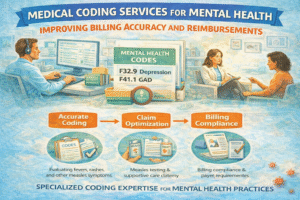
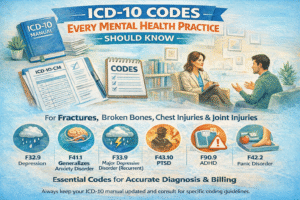
- F32.9: Major depressive disorder, unspecified
- F33.1: Major depressive disorder, recurrent moderate
- F41.1: Generalized anxiety disorder
- F43.10: Post-traumatic stress disorder (PTSD)
- F90.9: Attention-deficit hyperactivity disorder (ADHD)
- F31.9: Bipolar disorder, unspecified
- F20.9: Schizophrenia, unspecified
Every time a service is billed, the diagnosis code has to verify its medical necessity.
The Impact of Coding Errors on Mental Health Revenue
Coding always remains a complex step of medical billing because coding rules are so detailed. That’s why coding errors are surprisingly common in behavioral health practices. So common coding errors that can impact revenue include:
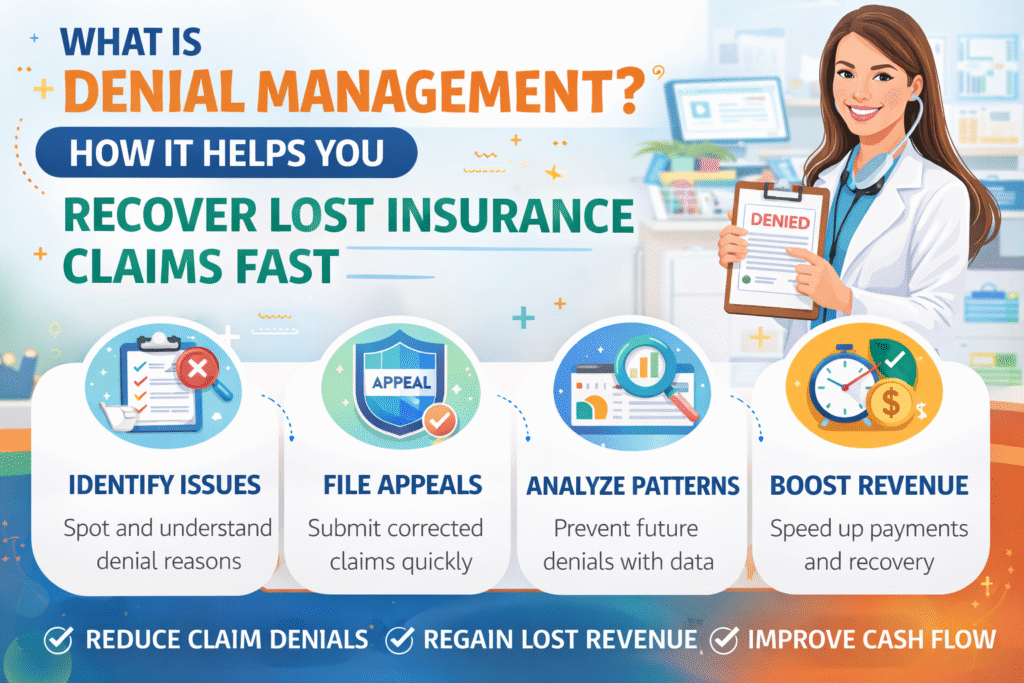
Claim Denials
Insurance companies reject thousands of mental health claims each year due to coding errors.
Common denial reasons include:
- Incorrect CPT code
- Missing modifiers
- Invalid diagnosis code
- Insufficient documentation
Underpayments
Sometimes claims are accepted, but because the incorrect code was entered, they are paid incorrectly.
For example, billing for a 30-minute psychotherapy session rather than a 60-minute one can significantly reduce reimbursement.
Delayed Payments
If a claim needs to be corrected and resubmitted, the payment cycle can last several weeks or months. This delay can have a major effect on the financial stability of small practices.
Telehealth Coding for Mental Health Services
Telehealth has emerged as a crucial component of mental health care after COVID. Nowadays, secure video platforms are used for many therapy sessions. But from a medical billing perspective, telehealth services require specific coding adjustments.
Providers need to include modifiers such as:
- Modifier 95 – Telehealth service delivered via real-time video
- Modifier GT – Interactive telecommunication service
Additionally, the correct place-of-service codes must be used when billing telehealth visits.
The Role of Documentation in Mental Health Coding
Documentation and Coding are two main aspects of medical billing. And they both work together. If one is missing, then it affects the other one. So accurate coding depends heavily on thorough documentation.
With the goal of a claim being submitted successfully, mental health providers must document:
- Duration of the session
- The method of treatment applied
- Patient development and therapeutic response
- Updates on diagnoses
- The medical need for the service
Clear documentation supports claims during insurance evaluations and enables coders to assign the appropriate codes.
Benefits of Professional Medical Coding Services for Mental Health
Because coding errors can be costly, many behavioral health providers choose to outsource their coding operations to the best medical billing companies in the USA like Reventage Billing. Our team understands the unique challenges of mental health coding and works closely with providers to improve billing efficiency. Professional mental health medical coding services provide you with different important advantages.
Improved Billing Accuracy
Behavioral health billing is the area of expertise for certified medical coders, who also know how to accurately apply codes. Our skilled coding specialists at Revantage Billing are familiar with the CPT and ICD-10 coding regulations for behavioral health billing services. Their extensive understanding ensures that claims are submitted correctly.
Faster Insurance Reimbursements
Accurate coding leads to clean claims, which means insurance companies process them faster. And when you submit a claim quickly, you get a quick payment and ultimately, your practice will have better cash flow.
Reduced Administrative Work
Mental health providers are already busy with different operations like managing patient care, documentation, scheduling, and compliance tasks. Outsourcing coding will free up time so they can give more time to their patients and more focus to their practice.
Compliance with Healthcare Regulations
Professional medical coding companies stay updated with:
- CPT code updates
- ICD-10 revisions
- Insurance policy changes
- Government compliance regulations
At Revantage Billing, our medical coding experts protect practices from costly billing mistakes and efficiently handle their revenue cycle management.
Detailed Reporting and Revenue Insights
Many coding service providers also provide revenue cycle analytics that help practices understand:
- Claim denial trends
- Insurance payment patterns
- Coding performance
These insights can help practices optimize their billing strategy.
Why Choose Revantage Billing for Mental Health Coding Services
Mental health practices need the best medical billing partner who understands the complexities of behavioral health coding. Revantage Billing provides the expertise and support providers need to maintain a healthy revenue cycle. We believe that only coding is not necessary for successful claim submission but expertise also really matters.
Behavioral Health Expertise
Revantage Billing specializes in coding mental and behavioral health services. With the experience of thousands of claim submissions, we have a better understanding of how to comply with medical coding regulations and which ones are most important. Additionally, we prefer claim scrubbing technology, which verifies claims for accuracy before submission.
Certified Coding Professionals
Our team of experienced coders stays updated with the latest CPT and ICD-10 coding changes to ensure accuracy. Our first priority is accuracy. That’s why our experts review documentation carefully to choose the most appropriate CPT and ICD-10 codes. This ensures providers receive full reimbursement for services rendered.
HIPAA-Compliant Processes
Revantage Billing follows stringent HIPAA regulations to ensure that all patient information is secure, private, and protected from unauthorized access. To protect financial information and medical records, we educated our staff to adopt controlled access protocols, encrypted data transfers, and secure billing systems.
Transparent Reporting
Most of the providers don’t have an idea what’s happening with their billing and how claims are submitted. Revantage Billing eliminates all your uncertainty by offering transparent and easy-to-understand reporting. Our reporting solution offers practices with clear information about billing performance, claim status, reimbursement trends, and denial rates.
Focus on Revenue Growth
Revantage Billing not only takes the responsibility of claims, but we also work hard to help mental health practices maximize their revenue potential. By improving coding accuracy, verifying claims before submission, and addressing denials quickly, our team helps reduce revenue loss and improve overall financial stability.