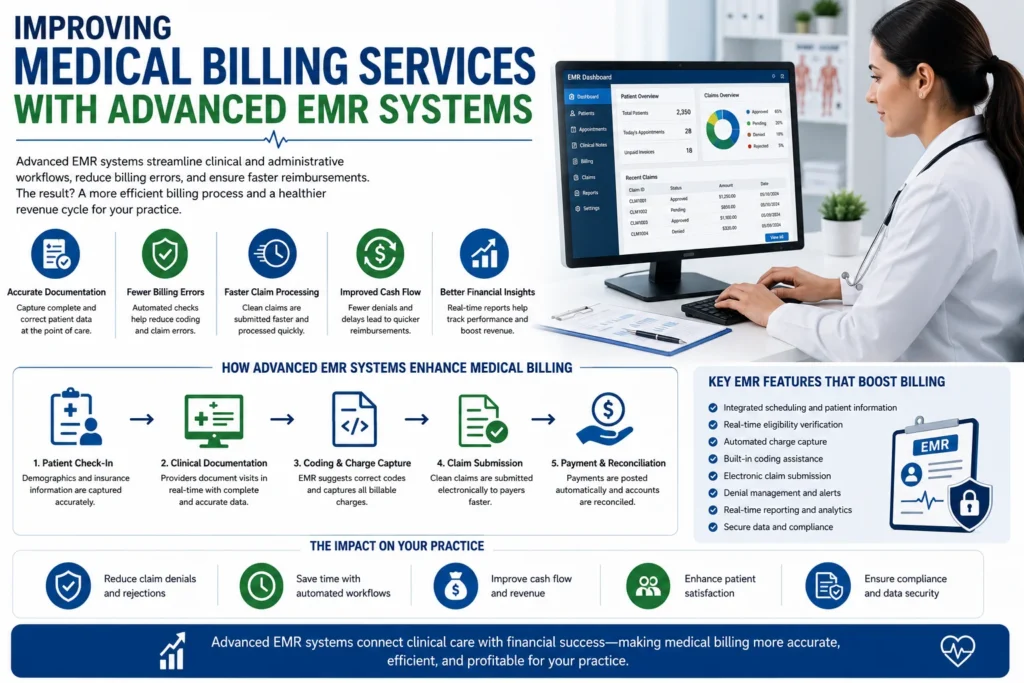

Claim denials, rejections, and payment delays are the biggest challenges healthcare practices face every day. But one important metric called the clean claim rate can help providers avoid these problems. A higher clean claim rate means more claims are accepted and processed correctly the first time they’re submitted. That means faster reimbursements, fewer denials, lower administrative costs, and healthier cash flow for your practice.
But how does this clean claim rate impact your revenue cycle? Let’s discuss what a clean claim rate is and how healthcare organizations can improve first-pass claim acceptance.
What Is a Clean Claim Rate?
A clean claim is a medical insurance claim that contains accurate, complete, and compliant information. It doesn’t require corrections, additional documentation, or manual intervention before the payer processes it.
In simple terms, a clean claim is a claim that’s accepted the first time without being rejected or denied.
The clean claim rate (CCR) measures the percentage of claims that pass through the payer’s system successfully on their first submission. For example, if 1900 of 2000 claims are accepted, the clean claim rate would be 95%.
Formula:
Clean Claim Rate = (Number of Claims Accepted on First Submission ÷ Total Claims Submitted) × 100
A 95% clean claim rate is considered very good but many high-performing healthcare organizations aim for 96% to 98% or higher.
Why Is the Clean Claim Rate So Important?
A low clean claim rate is not just frustrating but it directly affects your cash flow and your team’s work. Providers often focus on collecting payments but overlook the process that affects how quickly they get paid.
Every rejected or denied claim means analyzing what your staff is doing, figuring out what went wrong, fixing it, and resubmitting.
That’s time your billing team isn’t spending on new claims. Multiply that across dozens or hundreds of denials a month and you’ll see the actual labour costs are reducing your margins. Not only this but you’ll also face reimbursement delays as denied claims take 60, 90, even 120 days if recovered again. Some practices also give up appealing smaller denials because the cost of appealing exceeds the payment.
A clean claims rate means:
- Faster Reimbursements
- Fewer Claim Denials
- Better Cash Flow
- Lower Administrative Costs
- Improved Staff Productivity
- Higher Patient Satisfaction
Why Do Claims Get Rejected in the First Place?
Before you can fix your clean claim rate, you need to know where the leaks are coming from. Some common reasons include:
Incorrect or incomplete Patient Information
A misspelled name, wrong date of birth, or outdated insurance ID can deny a claim instantly. It sounds small but data entry errors are one of the most common reasons claims get rejected before they even reach a human reviewer. Here, front-desk registration plays a crucial role in preventing these mistakes.
Insurance Eligibility Problems
The patient’s coverage lapsed, they switched plans, or the service isn’t covered under their current policy. If nobody checked eligibility before the appointment, it causes rejected claims. That’s why it is important to first verify eligibility before every visit.
Coding Errors
Wrong CPT or ICD-10 codes, mismatched codes that don’t support medical necessity, or outdated codes that payers no longer accept are common medical coding errors. This is a big one and it gets more difficult as coding guidelines are updated year to year. Accurate coding requires ongoing education and regular coding audits.
Missing Modifiers
Modifiers provide additional information about medical procedures. Using the wrong modifier or forgetting one altogether can trigger automatic claim edits. Some common errors include missing modifier 25, incorrect modifier 59 usage, or missing laterality modifiers.
Missing prior authorization
Some procedures require approval from the insurance company before they are performed. If you skip this step, the claim will likely be denied, no matter how accurate the rest of it is.
Duplicate claims
Sometimes a claim gets submitted twice by accident, whether from a system glitch or a follow-up team member who didn’t realize it had already gone out. This duplication causes confusion and triggers automatic rejections.
Practical Ways to Boost Your Clean Claim Rate
Improving your clean claim rate requires consistent attention to every step of the revenue cycle management, from patient registration to claim submission. The good news is that most claim errors are preventable with the right processes, technology, and staff training. Some of the proven strategies for clean claim submission include:
Verify Insurance Eligibility Before the Visit
One of the simplest yet most effective ways to improve your clean claim rate is to verify a patient’s insurance coverage before every appointment. This should happen every single time, not just for new patients. Coverage changes often happen, like a patient has changed jobs, switched to a new plan year, a policy cancellation, or lost coverage altogether.
Running an eligibility check before the appointment (not after) identifies these issues while there’s still time to have a conversation with the patient.
Double-Check Patient Demographics at Every Touchpoint
Front desk staff should be trained to confirm the patient’s name, date of birth, address, and insurance details at check-in. It feels repetitive but it’s a lot less repetitive than fixing a denied claim three weeks later.
Invest in Accurate Medical Coding
Having certified coders or a medical billing partner with strong coding expertise helps improve claim accuracy. Codes need to match the documentation, support medical necessity, and reflect the most current guidelines. Regular coding audits can find patterns of errors before they become habits. Accuracy here can also reduce compliance risks and protect your practice during payer audits.
Confirm Prior Authorizations Ahead of Time
You have to build a system that can be a checklist, software, or dedicated staff member that helps you identify which procedures require prior authorization and start the approval process early. Don’t leave it until the last minute.
Use Claim Scrubbing Software
Claim scrubbers automatically review claims for errors before submission, catching things like missing fields, invalid codes, or formatting issues. It is just like a spell-check for your claims. It won’t catch everything but it’ll catch a lot, and it catches it before the payer ever sees it.
Track Your Denials and Look for Patterns
Don’t just fix denials one at a time; try to track them. Analyze the patterns: are most of your rejections coming from one payer? One specific code? One provider?
Patterns tell you where you have to focus more instead of fixing one issue at a time.
Train Your Staff Regularly
In medical billing, billing rules, payer policies, and coding guidelines change constantly. A team that trained well two years ago might be unknowingly making mistakes today simply because the rules have changed. That’s why keeping updated with new billing guidelines is necessary.
Consider Outsourcing to Billing Experts
Sometimes the most efficient fix isn’t adding more internal processes; it’s handing the work to a team that specializes in exactly this. Outsourcing to an experienced medical billing company can improve clean claim rates by combining certified coding expertise, advanced billing technology, and proactive denial prevention. A dedicated billing partner is well-experienced in handling claim accuracy, payer requirements, and denial trends across dozens of practices. The best medical billing services provider finds things that an in-house team might miss simply due to bandwidth.
How Revantage Billing Helps Practices Get This Right
Improving your clean claim rate is all about preventing errors before claims are submitted. That’s why your practice needs the best medical billing services.
At Revantage Billing, clean claims are not just a single step for us; they’re the whole point. Our team handles eligibility verification, accurate coding, prior authorization tracking, and claim scrubbing before anything goes out the door. When something does get denied, our denial management team appeals it on the spot and makes corrections.
As a result, the practices we work with experience fewer denials, faster payments, and a lot less administrative headache.
We want your staff to focus on patients instead of paperwork and more predictable cash flow for your practice.
If you want to maintain a higher clean claim rate, book a free consultation at +1 945 206 – 7001 and see how Revantage Billing turns your practice revenue into healthy cash flow.